Harmony studying high-margin surface gold projects in Free State and West Wits

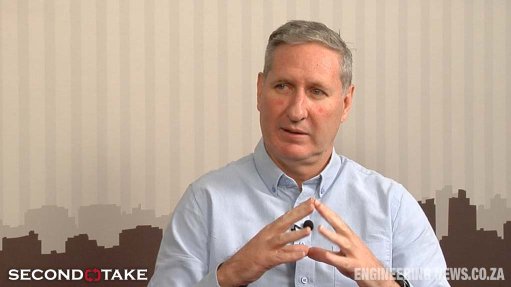
Harmony Gold CEO Beyers Nel interviewed by Mining Weekly's Martin Creamer. Video: Darlene Creamer.
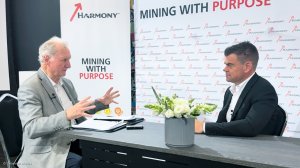


JOHANNESBURG (miningweekly.com) – Harmony Gold Mining Company is progressing studies to recover the gold from its Free State tailings dams as well as those that span the West Wits area around its Mponeng gold mine.
The Johannesburg Stock Exchange-listed company's Free State tailings alone host 5.7-million ounces of surface gold.
“We’ve not progressed those studies to the full extent yet. We’re in the process of doing that, which will firmly fit into the quadrant of our surface production, which is high-margin safe production for the future,” Harmony Gold CEO Beyers Nel pointed out to Mining Weekly following this week’s declaration by Harmony of a record R3.4-billion half-year dividend. (Also watch attached Creamer Media video).
“We are most pleased to return more of the gold-price tailwind upside over the last while to our shareholders while also replacing ounces mined."
In addition to Harmony's investments in the CSA copper mine, which Nel describes as being "phenomenal", and Eva copper project, in Australia, he spoke of South Africa Inc looking up, "and we’re also quite positive about investing back into South Africa in order to sustain jobs and to make sure that South Africa's gold mining industry continues to be as strong as it always has been."
Mining Weekly: During the presentation, you twice used the word phenomenal. The first was about CSA. You said, ‘this is a phenomenal orebody’. Can you tell us why you used the word phenomenal?
Nel: CSA is the highest-grade copper orebody in Australia. It's got a 3% reserve grade and we’ve got new drill intercepts there, which already indicate potential mine life extension. We’re very excited about that orebody, which I think is going to be very valuable going forward. But it's an orebody that, technically, we need to de-constrain, both on the ventilation side and through the creation of the necessary underground flexibility, so that we can have consistent, predictable production coming from the CSA mine.
You also used "phenomenal" when speaking about Wafi-Golpu in Papua New Guinea. We've been hearing those two words Wafi and Golpu for decades now, but I got the feeling during your presentation that we’re getting a bit closer to seeing operational activity there.
Wafi-Golpu’s a once-in-a-generation asset and that's why we use the word phenomenal. It’s a porphyry, so it will be a big, bulk underground copper/gold mine. Not a narrow tabular or a batching process or an openpit mine, but a big underground block cave mine. Quality gold and quality copper are going to come from Wafi-Golpu. I wouldn't risk saying we're getting closer, but we’re certainly progressing the discussions with the Papua New Guinean government, through the Spear Review Team, as well as the State Negotiating Team and our JV partners, to take the mine up the value curve. The very next step is getting the mining permit, remembering that a mining permit in Papua New Guinea has got a 40-year tenure. So, yes, it's been taking long. It's been taking maybe longer than anticipated, but with such a long tenure it's important to get it right, and the quality of the asset is so good that it's worth the wait and worth getting the permit conditions 100% right for maximum value for all stakeholders.
Regarding South Africa's cyanide shortage, tell us about the solution you've come up with in briquette form.
Sodium cyanide is the main reagent we use to extract the gold out of the gold-bearing ore. It’s a chemical that we use, and we get it in liquid form. We’re not manufacturing or developing the cyanide briquettes ourselves. There are other players in the industry that followed the same strategies. This is just flexibility and a supply chain alternative, which is a fixed form called a cyanide briquette that one can import from overseas. But then you have to have infrastructure to be able to dissolve that briquette into liquid, which we use in our processing plant, so, we’re just ramping up capacity in Harmony to have more dissolution facilities, more capacity, so that we can procure our liquid cyanide and briquette cyanide, for when there are supply chain disruptions.
During the presentation, when you spoke about the heat of your underground CSA copper mine in Australia, I got the impression that the mine's pretty hot. Is it hotter than we're used to in South Africa and what ventilation plans have you got in place?
It’s certainly not hotter than we're used to. We mine the deepest mines in the world in South Africa. Deep mines are hot mines, just on the basis of the virgin rock temperatures that we expose when we excavate at those depths. So, no, it's nothing new to Harmony. It's something that we know. It's something that we grew up with. Deep underground mining is something we've been doing for 75 years. But the ventilation circuit at CSA is constrained. In other words, we don't have an optimal ventilation layout and optimum quantities of ventilation going through the mine, which makes the mine’s temperature slightly elevated compared to what it should be. So, our work is to de-bottleneck that, implement the right technical solution to make sure that we can improve the amount of ventilation flow through the mine to bring those temperatures down. That's an area where we think the Harmony skillset, of mining the deepest, hottest underground mines in South Africa, is ideally suited to be exported to this mine in Australia, and to bring value to our shareholders and also our employees and our stakeholders in that area.
LOWER PRODUCTION
During the earlier media roundtable, Nel said in response to Mining Weekly’s question on whether Harmony’s 9%-lower half-year gold production of 724 000 oz was once-off or structural, that the lower production was the result of an earthquake in Papua New Guinea, which affected Hidden Valley, while South Africa’s cyanide force majeure, lower grades and lower metallurgical plant recovery than expected contributed too.
Hidden Valley’s tectonic-related mill motor failure in the gold plant, was brought about by an earthquake in-country.
Resulting vibrations damaged some of the civils, which are now restored and gold shipping delays have flowed over to the next reporting period.
In South Africa, the cyanide force majeure, lower grades and metallurgical plant recovery have largely normalised, which points to the lower production being once-off rather than structural.
Article Enquiry
Email Article
Save Article
Feedback
To advertise email advertising@creamermedia.co.za or click here
Research Reports

Projects

Latest Multimedia
Latest News

Showroom
Occupational health services, mobile clinics, wellness campaigns, aviation.
VISIT SHOWROOM
The Steel Tube Export Association of South Africa was established to develop sustainable, internationally competitive carbon steel tube and pipe...
VISIT SHOWROOM

Press Office
Announcements
What's On
Subscribe to improve your user experience...
Option 1 (equivalent of R125 a month):
Receive a weekly copy of Creamer Media's Engineering News & Mining Weekly magazine
(print copy for those in South Africa and e-magazine for those outside of South Africa)
Receive daily email newsletters
Access to full search results
Access archive of magazine back copies
Access to Projects in Progress
Access to ONE Research Report of your choice in PDF format
Option 2 (equivalent of R375 a month):
All benefits from Option 1
PLUS
Access to Creamer Media's Research Channel Africa for ALL Research Reports, in PDF format, on various industrial and mining sectors
including Electricity; Water; Energy Transition; Hydrogen; Roads, Rail and Ports; Coal; Gold; Platinum; Battery Metals; etc.
Already a subscriber?
Forgotten your password?
Receive weekly copy of Creamer Media's Engineering News & Mining Weekly magazine (print copy for those in South Africa and e-magazine for those outside of South Africa)
➕
Recieve daily email newsletters
➕
Access to full search results
➕
Access archive of magazine back copies
➕
Access to Projects in Progress
➕
Access to ONE Research Report of your choice in PDF format
RESEARCH CHANNEL AFRICA
R4500 (equivalent of R375 a month)
SUBSCRIBEAll benefits from Option 1
➕
Access to Creamer Media's Research Channel Africa for ALL Research Reports on various industrial and mining sectors, in PDF format, including on:
Electricity
➕
Water
➕
Energy Transition
➕
Hydrogen
➕
Roads, Rail and Ports
➕
Coal
➕
Gold
➕
Platinum
➕
Battery Metals
➕
etc.
Receive all benefits from Option 1 or Option 2 delivered to numerous people at your company
➕
Multiple User names and Passwords for simultaneous log-ins
➕
Intranet integration access to all in your organisation